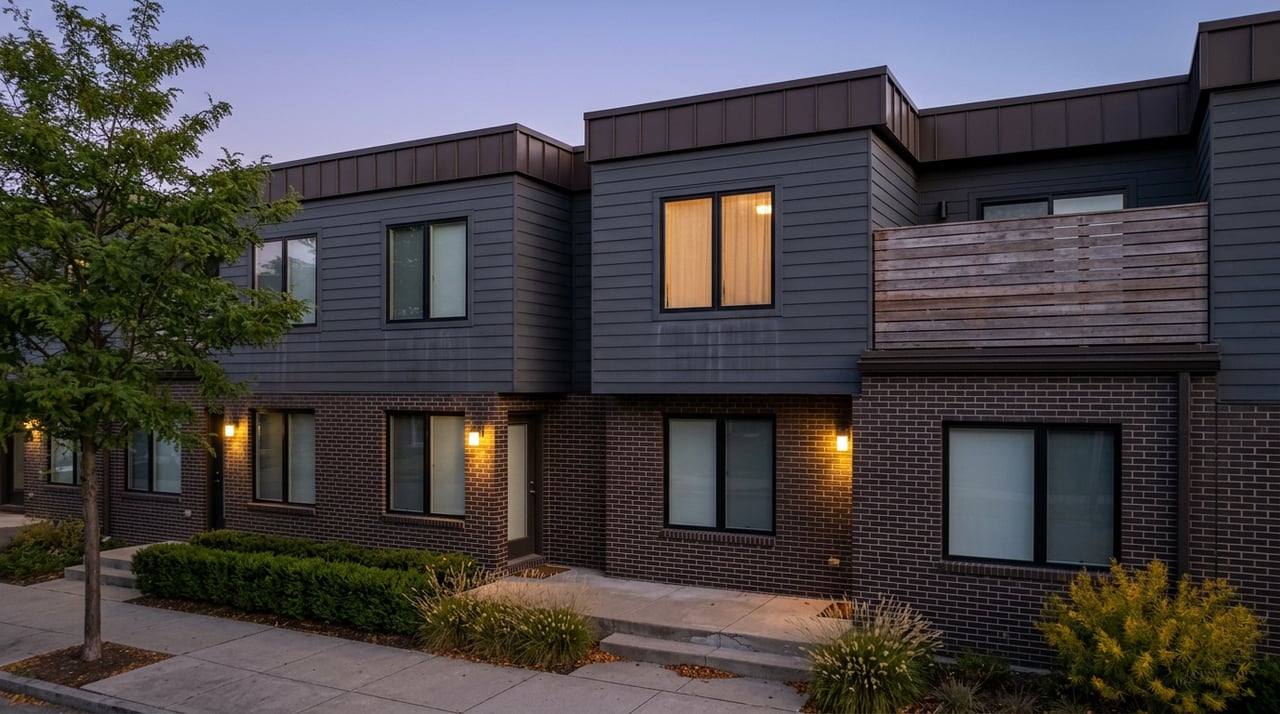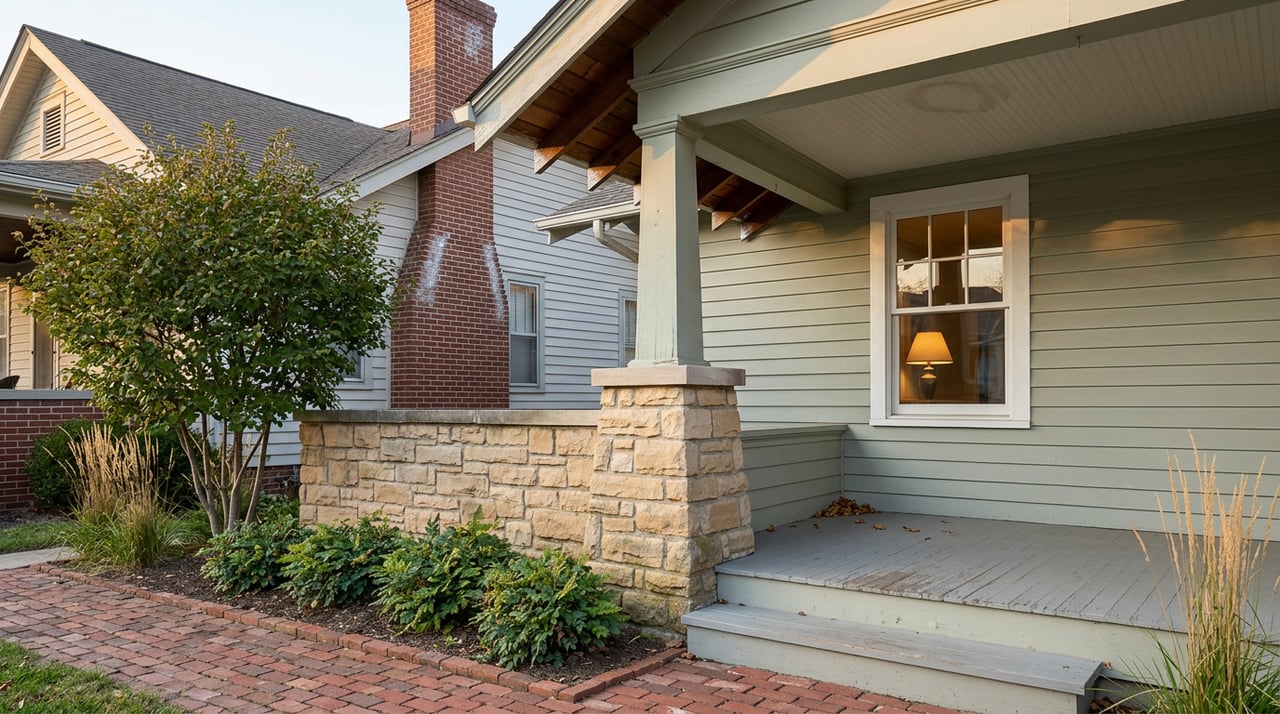
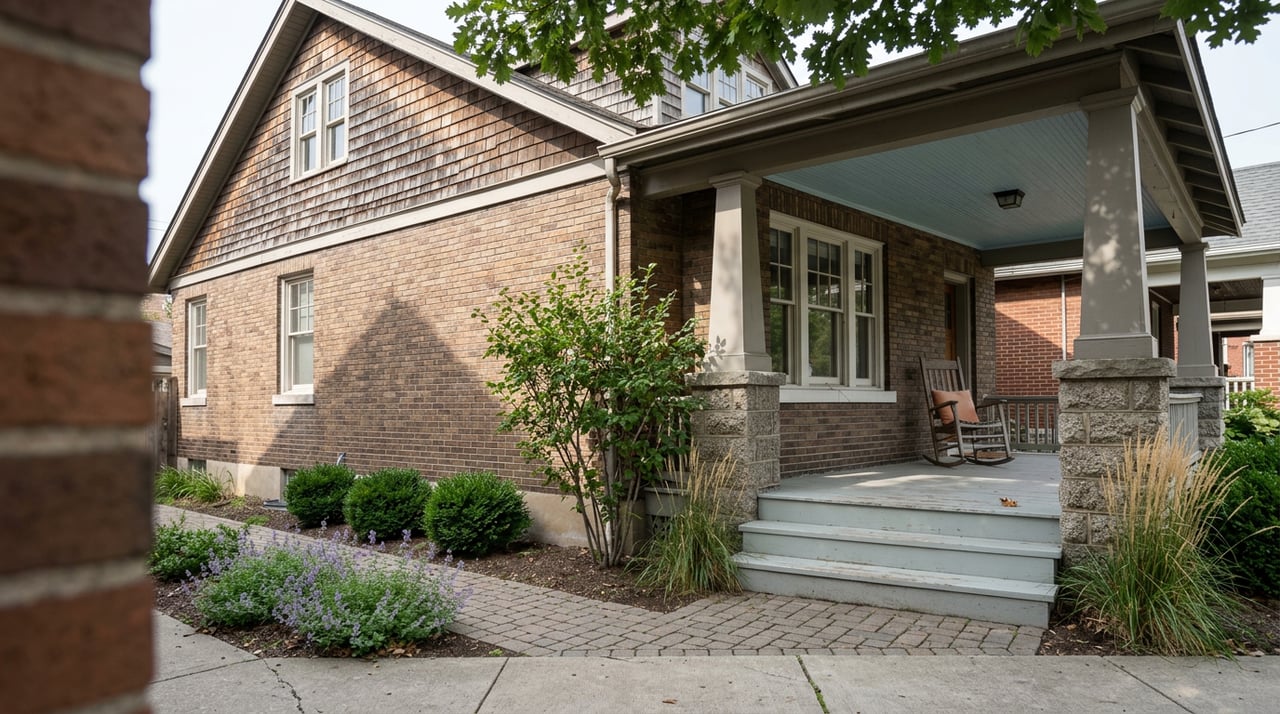
Ask around West Highland about what "historic district" means for a renovation, and most people describe it as one blanket rule: old house, extra permitting, that's the whole story. That description skips the detail that actually decides your timeline and your invoice, which is whether your specific house is classified as contributing or non-contributing to its historic district. That classification, buried in a designation report most buyers never open, determines whether your project goes in front of a neighborhood review committee, a full city commission hearing, or neither at all.
West Highland sits inside two separate historic districts: the Allen M. Ghost Historic District, established in 2010, and Packard's Hill, established in 2017, both governed under Denver's Landmark Preservation Ordinance. Within each district's boundary, houses are sorted individually. A contributing structure was built during the district's period of significance and still carries enough original material and form to read as historic. A non-contributing structure, whether built later or altered heavily since, does not. That distinction, not the district name on a map, is what triggers a review by Denver's Landmark Preservation Commission.
The paperwork that actually shows up
A March 2026 case from the Allen M. Ghost district makes the mechanics concrete. The house at 3383 West 31st Avenue, known historically as the Boyle/Snyder House, was built in 1903 by the firm Schooley & Masten and is classified as a contributing Foursquare in the district's designation records. When the owner applied for a rooftop and rear addition, the project first went to the West Highland Neighborhood Association's Design and Preservation Committee, which received the referral on January 6, 2026, reviewed the design with the project's designer, and sent the Landmark Preservation Commission a letter supporting the plan with a few technical notes attached. The commission's own staff report, dated March 17, 2026, approved the addition under specific sections of the city's design guidelines and attached two conditions: change the exposure of the new Hardie Board horizontal lap siding to between 4 and 6 inches, and provide a window schedule proving every new window sits at least 2 inches inset from the wall plane.
That is not a rubber stamp. It is a technical review with line-item conditions, layered on top of Denver's standard building permit process, not in place of it.
A second case in Packard's Hill shows how far that review reaches. An addition that had already been approved needed to go back to the commission for an after-construction sign-off because the built eave depth and fascia board width did not match the approved drawings. Even a change measured in inches on a secondary architectural detail required another pass through the same review chain.
Now compare both to what happens with a non-contributing structure inside the same district boundaries. Denver's ordinance does not require public notification or a hearing before a non-contributing building is demolished. The review layer that governed the siding exposure on West 31st Avenue and the eave depth on Osceola simply does not attach to a house the district has already classified as non-contributing.
| Contributing structure | Non-contributing structure | |
|---|---|---|
| Review before exterior changes | WHNA Design and Preservation Committee referral, then Landmark Preservation Commission | Standard city building permit only |
| Demolition | Requires commission approval and, for larger projects, a public hearing | No public notification or hearing required |
| Example | Boyle/Snyder House, 3383 W 31st Ave, Allen M. Ghost district | A later-built or heavily altered home inside the same boundary |
That gap is the reason two houses on the same block, both built before 1943, can carry entirely different renovation math. One needs a neighborhood referral, a commission hearing, and a materials schedule. The other needs a standard city permit and nothing more.
What that means for resale value, and why the usual argument misses the point
West Highland has argued about this for years, and the argument usually gets compressed into a single yes-or-no question: does historic designation help or hurt home values. Reporting on the Packard's Hill designation fight captured both sides. A sales comparison conducted by the local firm Nostalgic Homes, covering February 2016 through February 2017, found that historic districts outperformed nearby non-designated areas on three measures: asking prices were attained more often, values were higher per square foot, and homes sold faster. A homeowner who opposed the designation argued it would "decrease the value of some homes, especially those in disrepair," warning that the added layer of commission review would shrink the pool of interested buyers for houses that still needed work.
Another homeowner, who had already been through a comparable process in a different Denver historic district before moving to West Highland, reported the opposite outcome for her own property, citing substantial appreciation over her ownership.
Both accounts are accurate, because they describe different houses. A contributing home already updated to guideline-compliant materials, with its windows and siding long since brought into line, sells into a buyer pool that values the district's protections and its curb appeal. A contributing fixer that needs a new roofline, replacement windows, or a rear addition carries the same review cost as the West 31st Avenue project, and an informed buyer prices that in. District-wide averages hide this split. Your specific house's classification, condition, and scope of planned work decide which side of it you land on.
One thing shifting in 2026
Denver's Landmark Preservation staff spent early 2026 revising the design guidelines that govern exactly this kind of project, with drafts moving through public review across January, February, and March of 2026. The proposed language gives more flexibility for replacing historic windows and doors that are not classified as "character" features, meaning windows or doors that are not part of a building's defining architectural identity or its front facade. If your renovation plan centers on window replacement rather than an addition, it's worth checking the current status of that specific guideline before assuming the older, stricter standard still applies.
Before you write an offer or list a contributing home
A few questions are worth answering before either side signs anything:
- Is the address inside the Allen M. Ghost or Packard's Hill boundary, and is the structure itself classified contributing or non-contributing? This single fact determines whether a neighborhood and city review applies at all.
- What is the actual scope of planned work? An addition or new construction triggers a different chapter of the design guidelines than a masonry repair or a window swap, and the 2026 guideline revisions change the window and door calculus specifically.
- How does the neighborhood review timeline stack against your closing date? The Design and Preservation Committee meets monthly at Nostalgic Homes' office on West 32nd Avenue, and a referral needs to clear that meeting before it reaches the city commission.
- Has the seller already done work without review? An after-the-fact approval, like the one required for the eave and fascia changes in Packard's Hill, adds time and can complicate a sale if it surfaces during due diligence.
None of this shows up on a listing sheet. It shows up when a buyer's contractor calls the city to pull a permit and learns the project needs a Landmark Preservation Commission hearing first, or when a seller's planned kitchen addition turns out to require a materials schedule nobody budgeted for.
West Highland isn't standing still around any of this. A concept plan is currently moving through Denver's review process for the church campus at 3268 West 32nd Avenue, which would preserve the historic church and parsonage while adding six new detached homes on the northern portion of the site. It's a reminder that these districts are built to manage change, not stop it, and that a house's contributing status is a starting point for a conversation with the city, not a wall.
If you're weighing a purchase or a sale inside one of West Highland's historic districts, that conversation goes faster with someone who has already had it more than once. Lauren Basford works with buyers and sellers across West Highland and the surrounding Denver neighborhoods and can help you sort out a property's contributing status, its likely review timeline, and what that means for your offer or your list price before you're already under contract. Contact Lauren to talk through your specific address.
Frequently asked questions
How do I find out if a specific West Highland house is contributing or non-contributing? The classification is set in the original historic district designation report, which Denver's Landmark Preservation program keeps on file. The West Highland Neighborhood Association's Design and Preservation Committee can also confirm a property's status and district boundary before you write an offer.
Does every renovation in a historic district need a hearing? No. Contributing structures require review under Denver's design guidelines, ranging from a neighborhood referral and staff-level sign-off up to a full Landmark Preservation Commission hearing for larger projects like additions. Non-contributing structures inside the same district boundary don't carry that requirement.
Will the 2026 design guideline changes make renovations easier? For window and door replacement specifically, the proposed changes allow more flexibility when the window or door isn't a defining character feature or the front facade door. Additions, new construction, and masonry work are governed by other sections of the guidelines that weren't part of this particular update.