Walk Tennyson Street on a September evening now and the light changes differently than it did in July. Fewer strings of festival bulbs, fewer sidewalk vendor tables. But there is a new kind of glow coming from the four-story building near 44th Avenue, where balconies that were empty all summer now have lamps on and bikes leaned against the railings. The corridor's biggest, loudest event of the year already happened. What is left is smaller, and this fall it belongs to people who were not living here the last time it happened.
Tennyson's social calendar in Berkeley is not one long summer that fades into fall. It runs on a fixed schedule set by the Tennyson Berkeley Business Association, and knowing where that schedule stands right now tells you more about the next six weeks than any generic list of "fall things to do" would.
Six Fridays, Not a Season
The Tennyson Berkeley Business Association's First Friday Cultural Walk runs on the same day every month from May through October, and the 2026 dates were set well in advance: May 1, June 5, July 3, August 7, September 4 and October 2. On those nights shops stay open past their usual hours, restaurants run specials, and live music fills the sidewalks in a way that turns eight blocks of Tennyson into something closer to a small-town main street than a slice of Denver.
Two of those six dates have already come and gone this fall. September 4 happened while most people were still thinking about it as a summer month. That leaves exactly one First Friday remaining in the 2026 season: October 2. After that, the walk goes dark until next May.
This matters more than it usually would, because the corridor's biggest event of the year, the Tennyson Street Fair, already happened back on July 17 and 18, with the Berkeley Beer Fest pouring pours from breweries with a North Denver footprint and more than 200 vendors lining the street between West 39th and West 43rd. That was the loud one. What is left this fall is the quieter monthly ritual, and it is down to a single remaining date.
A Building Filled In While No One Was Watching
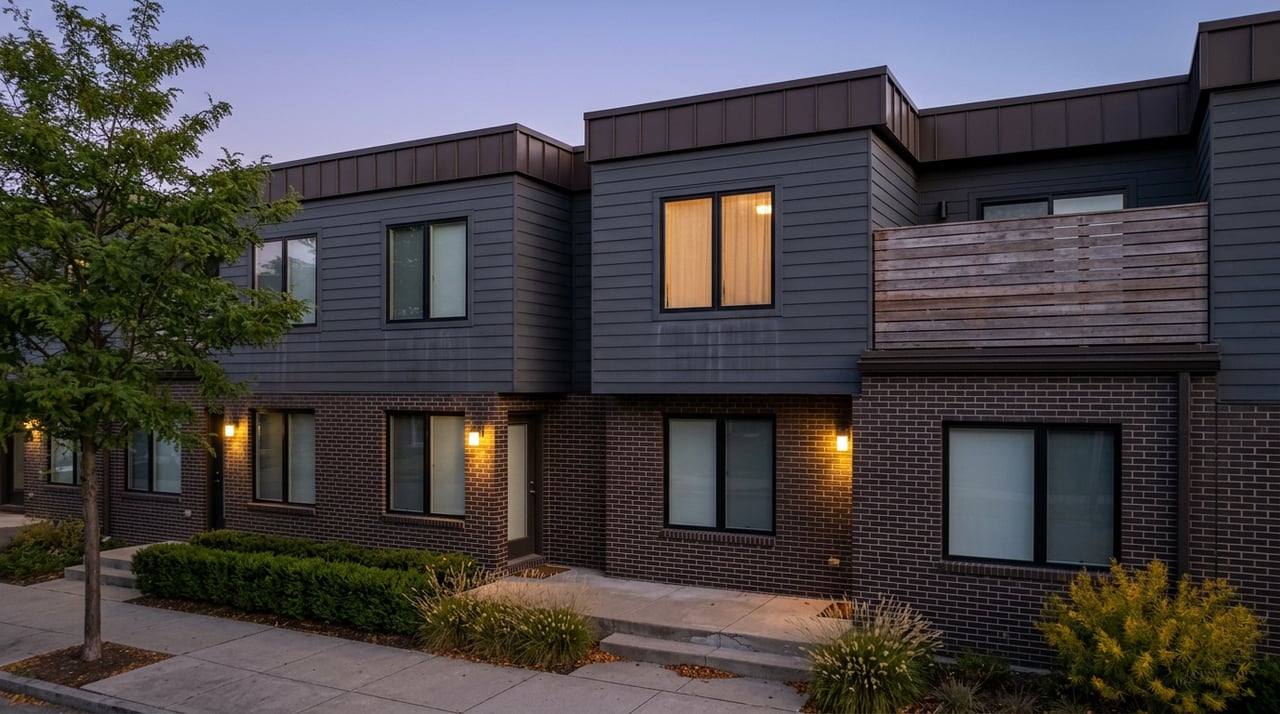
The corridor looks different this October than it did at the May 1 walk for a specific reason. The Vesper on Tennyson, a 34-unit apartment building at 4345 N. Tennyson St., opened in late August. ColoradoBiz reported that the building, developed by First Stone Development and leased through Cross Street, was already nearly 60 percent leased within weeks of opening. One-bedroom units start at $1,695 a month and two-bedrooms at $2,747, with private balconies, in-unit laundry and EV charging spots among the amenities.
Sixty percent of a 34-unit building is roughly twenty households who were not walking Tennyson Street in May but will be there for the last First Friday of the year in October. Some of those units have balconies that face the street directly, which means a meaningful slice of the corridor's newest residents will watch their first Cultural Walk from three stories up rather than as visitors driving in from somewhere else. The corridor is not just hosting one more monthly event. It is hosting it for a population that is partly new to the ritual itself.
The Anchors That Were Already There
New residents on Tennyson do not arrive at a blank corridor. They move into a stretch of street that has been building its identity for more than a century in some cases. The Historic Elitch Theatre, an 1891 wood-frame building at 38th and Tennyson that once hosted Douglas Fairbanks, Cecil B. DeMille and Grace Kelly, reopened in 2018 after a multi-year restoration and runs summer history tours starting each June. By the time October's First Friday arrives, that tour season will be winding down for the year, one more piece of the corridor's rhythm quietly closing out alongside the Cultural Walk.
Further north, the Oriental Theater on 44th Avenue keeps a music and event calendar running year-round and holds the distinction of being the longest continuously operating business in the neighborhood. And in between, César Chávez Park at 41st and Tennyson gives the corridor a smaller neighborhood green space with playground equipment, the kind of spot that hosts a birthday party on a Saturday afternoon without needing to be a destination park.
None of this is new information to anyone who has lived here more than a season. But it is worth naming plainly, because it is the backdrop the new building's residents are walking into. A hundred-plus-year-old theater and a thirty-four-unit apartment complex are now part of the same eight blocks, and the last First Friday of 2026 is the first time both populations will share the same Friday night at the same time.
Two Lakes, Two Different Fall Routines
Fall in Berkeley also means shorter daylight for the routines that do not depend on Tennyson Street at all, and the neighborhood happens to have two lakes that serve very different purposes.
Berkeley Lake Park, closer to the heart of the neighborhood, is built around an off-leash dog park that gets steady daily traffic, along with a recreation center that includes an indoor pool and a branch of the Denver Public Library on the same block. It is the park most people picture when they think of a Saturday morning errand loop.
Rocky Mountain Lake Park is a different kind of walk. Sitting at the edge of Berkeley where it meets the Sunnyside neighborhood, at 3301 W. 46th Ave., it centers on a paved mile-long loop trail that construction began on in 1906, opening to the public in 1910. Uncover Colorado notes it is open daily from 5 a.m. to 11 p.m. year-round, and the lake itself draws a steady birdwatching crowd along with runners doing loops and anglers working the shoreline. It is quieter than Berkeley Lake Park, further from the retail corridor, and better suited to an actual hour of walking than a quick dog-park stop.
Knowing the difference matters more once the days get shorter and a five o'clock walk needs to fit into less daylight. Berkeley Lake Park works for an errand-length loop. Rocky Mountain Lake Park works when the point of the walk is the walk itself.
What October 2 Actually Marks
Put it together and the last First Friday of 2026 is not just another date on a recurring calendar. It is the point where the corridor's newest residents, several weeks into living above street level on Tennyson, get their first full experience of the ritual that longtime residents have watched shape the block for years. It is also the last organized excuse before winter to walk the full stretch between 38th and 46th, past the Historic Elitch Theatre and the Oriental Theater, before the corridor settles into its quieter cold-weather pace.
For anyone who already calls Berkeley home, that single October Friday is worth treating as more than routine. It is the last night this year the street runs on its own clock instead of the calendar's, and it is the first time a new set of neighbors gets to see why that clock has kept running here for so long.
If you are curious about how a season like this one connects to what is actually happening in Berkeley's home market, or you want a longer look at the neighborhood's parks and trails, Lauren Basford keeps a close eye on both the Tennyson Street corridor and the wider Berkeley neighborhood. Reach out anytime to talk through what is changing on the ground here, whether that is a new building on the block or a shift in how a familiar street is used.