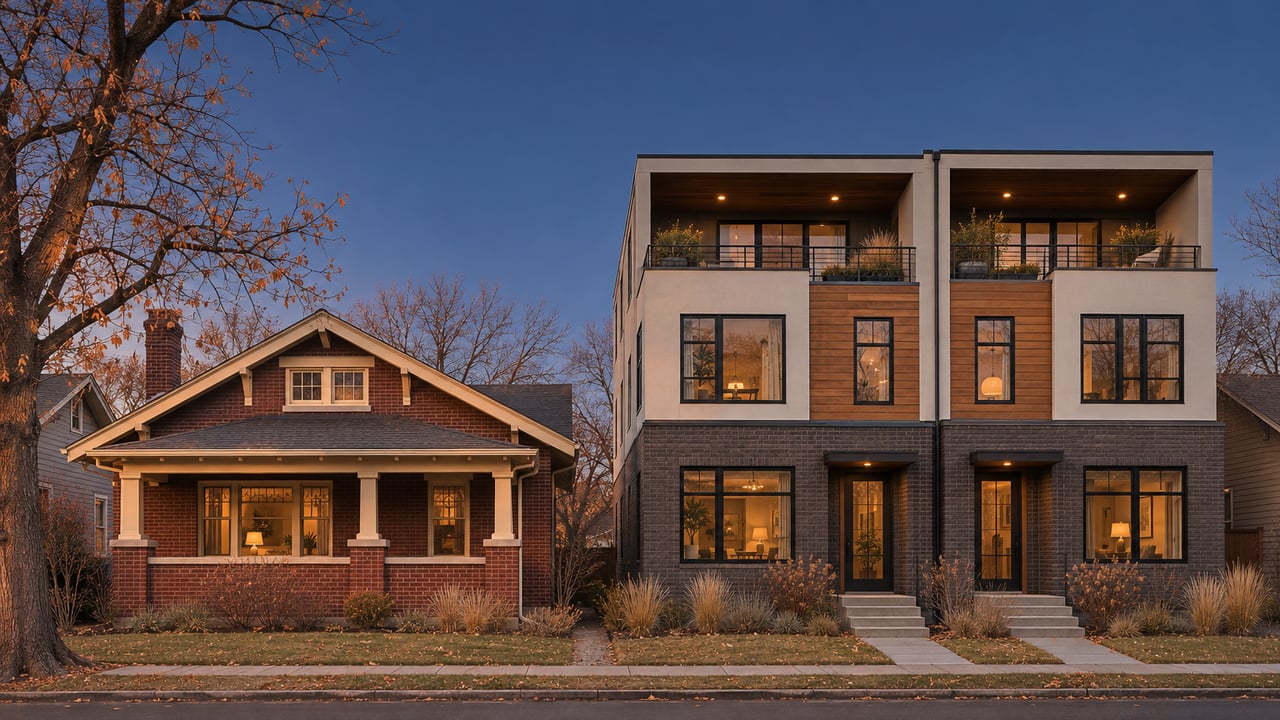
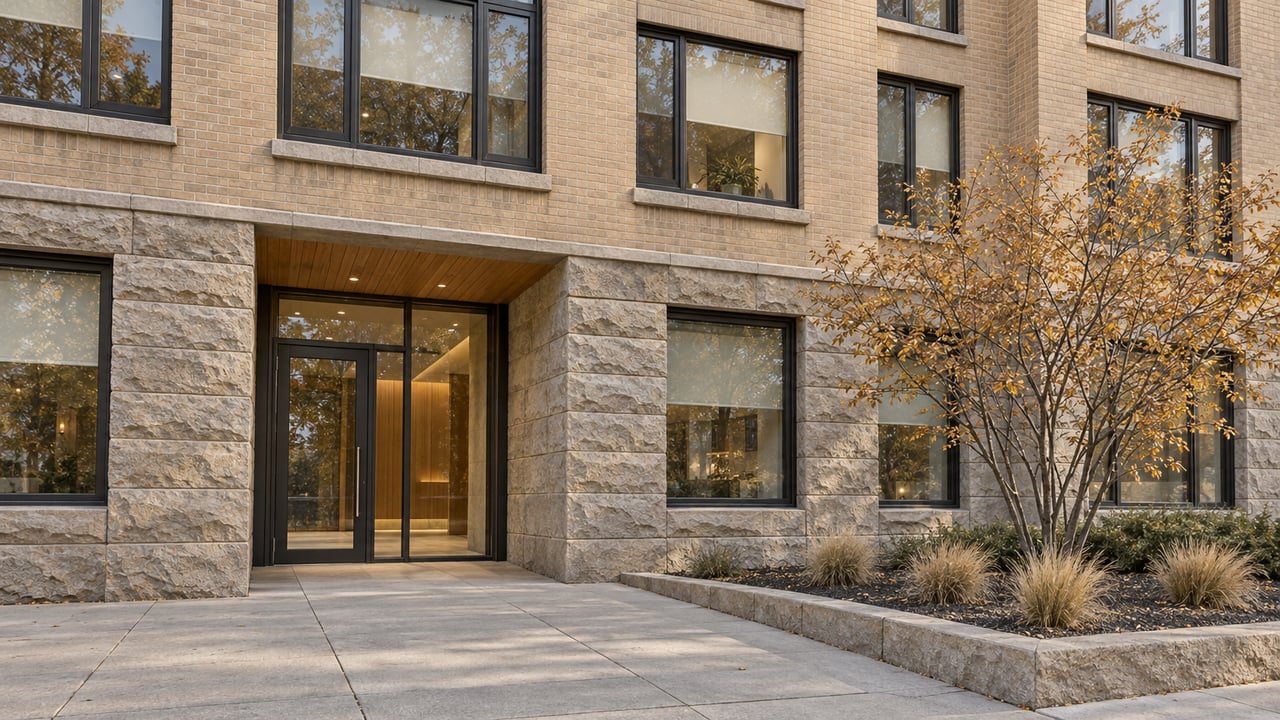
Where is the water heater? In a Denver condo of 50,000 square feet or more, that question now says more about the building's future obligations than its price, age or amenities do. Under the Energize Denver rules that took effect August 27, 2026, a large building where every unit has its own water heater and its own heating and cooling can ask for a lighter target. A building of the same size that runs on a shared central boiler can't make either of those requests.
For a buyer comparing two condos that look alike on paper, this is the difference that won't appear in the listing photos. It shows up in the building's mechanical drawings, the reserve study, and the HOA's paperwork with the city.
Energize Denver sorts condo buildings by their mechanical systems
Energize Denver is the city's building performance policy. It covers existing buildings of 25,000 square feet and up, and for a condominium the HOA is the party responsible for compliance. The city's technical guidance for large buildings, posted September 1, 2026, adds a Residential Condominium alternate compliance option that comes with two choices. One is a target adjustment, where the building's final target becomes no more than a 15% energy reduction from its baseline year. The other is a prescriptive pathway, where the HOA completes efficiency work estimated to cut energy use by at least 15% and, after documenting it once, no longer has to keep hitting an ongoing performance score.
Eligibility depends on size and on mechanical configuration:
| Condo building | Target adjustment or prescriptive pathway? | Timeline extension available? |
|---|---|---|
| 25,000 to 49,999 sq ft, current on benchmarking | Eligible | Yes |
| 50,000+ sq ft, each unit has its own hot water and its own heating and cooling, current on benchmarking | Eligible, with documentation of the setup | Yes |
| 50,000+ sq ft, sharing central hot water or central heating or cooling | Not eligible | Yes |
The middle row has to prove its case. An HOA claiming that units have their own systems can be asked for as-builts, photos, mechanical drawings, blueprints or a third-party engineering attestation.
Why the line runs through the boiler room
The split follows from state law. Colorado's statewide program, Building Performance Colorado, applies to buildings of 50,000 square feet and larger, and the state rule defines multifamily housing to include condominiums. Denver's guidance says large condos that share central hot-water or heating and cooling systems are covered by the state standard as well as by Energize Denver. It also notes that the state's multifamily target of 42.1 EUI was stricter than Denver's 44.2 when the guidance was published.
That gap explains the rule. Under HB25-1269, a building in a local program like Denver's can be "deemed" to comply with the state standard if it keeps up its local compliance, and only if the state finds the local program's reductions reasonably similar to its own. Denver's draft guidance from July 2026 says Energize Denver received that deemed-compliance status in January 2026. If Denver gave central-plant towers a 15% cap, it would risk losing that standing for buildings the state already holds to a tighter number. The city's guidance says the condo options were limited to keep deemed compliance in place for buildings of 50,000 square feet and larger.
Deemed compliance doesn't take a building out of the state program altogether. The Colorado Energy Office says Denver buildings covered by both programs still report to both and still pay the state's annual fees.
A replacement boiler doesn't count on the prescriptive path
A building that qualifies for the condo option still has to pick a path, and the paths treat equipment differently. The prescriptive pathway accepts envelope upgrades such as insulation and windows, a building automation system, retro-commissioning when savings are expected to top 5%, and cold-climate heat pumps. It explicitly rejects fossil-fuel space or water heating, including a like-for-like gas boiler replacement, even when the new unit is more efficient. A gas replacement is allowed on the target-adjustment path.
So the condo option ends up tied to the HOA's capital plan. An association expecting to replace a gas boiler, or gas water heaters, may be choosing its compliance path at the same time it chooses its equipment. Prescriptive work tied to a 2032 final target has to be finished by December 31, 2032, with documentation due by June 1, 2033. The guidance also says buildings don't have to replace HVAC systems before the end of their useful life.
Every condo can ask for time, and that request leaves a paper trail
The extension is the one tool every condo building over 25,000 square feet can use, central plant or not. Its eligible reasons point straight at HOA finances. An association can qualify when its capital reserves are below 30% of what its reserve study recommends for the identified work, or when it needs more time to raise money through dues or special assessments.
The application asks for a lot. An HOA citing low reserves has to submit a fundraising plan that explains why it needs the time, what funding it needs, how it will collect the money, and the timeline. Supporting material can include the reserve study, current dues or assessments, and a financial analysis.
For a buyer, that plan may be one of the most useful documents in the building. A board that has applied for an extension has already written down, for a city regulator, how it expects owners to pay for the work. When that plan says "special assessment," a buyer has something specific to ask about well before closing. For more on how HOA costs fit into the overall budget for a Denver purchase, see the buyer resources on this site.
The deadlines are later than before, but the documents don't all agree
The revised schedule eases the pressure. The city's guidance moves the 2024, 2025 and 2026 interim targets to 2028, drops the 2027 interim target, and pushes the final target from 2030 to 2032. That timeline extension depended on an opt-in during the 2025 benchmarking submission. No building is required to cut its energy use by more than 42%, penalty rates for buildings of 25,000 square feet and up were cut in half, and the guidance says no penalties will be levied until late 2029. For a typical building with two performance periods, the target penalty is listed at $0.23 per kBtu.
Two caveats apply. First, Section 4.1 of the city's Rules and Regulations PDF, effective August 27, 2026, still lists performance targets in 2025, 2027 and 2030, which doesn't match the 2028 and 2032 schedule in the September guidance. A building's own notice from the city's Office of Climate Action, Sustainability and Resiliency is the document that shows which dates apply to it. Second, one deadline is coming up now. Each building has to complete third-party verification of one benchmarking submission by the end of the 2026 reporting year. The state side runs on its own clock. Its reporting window for 2026 ran July 1 to November 1.
The city reported progress in its September 2, 2026 announcement. At that point, 62% of covered large buildings had reached their first efficiency target and 44% already met their final target, up from 15% in 2022. A building in that 44% may have very little left to do. A central-plant tower far from its target is in a different position, and the price per square foot won't show which one a listing is.
The legal picture is still open as well. In the Colorado Apartment Association's lawsuit against the city, a September 30, 2026 district court order dismissed the claims about consumer appliances and let key building-wide claims continue in part. The case hasn't reached a final judgment.
Questions to bring to the HOA before an offer
Denver publishes a public benchmarking dataset, most recently updated September 22, 2026, with building-level energy use data going back to 2016 and the energy targets assigned to each building. It's a useful starting point, but it may not show a building's extension, chosen pathway or enforcement status. Those details live with the association. This section is general information, not legal or financial advice, so please confirm any building's obligations with the HOA, your attorney or your lender.
- Does the building share a central boiler, central hot water, or central heating or cooling, or does each unit have its own equipment?
- How large is the building, and has the HOA received its notice from the city confirming its target years?
- Has the HOA applied for the Residential Condominium alternate compliance option, and which path did it choose?
- Did the HOA request a timeline extension, and if so, can you see the compliance plan and the fundraising plan?
- What does the current reserve study recommend for mechanical and envelope work, and how much is funded today?
- Has the third-party data verification for the 2026 reporting year been completed?
Sellers can also put this file together ahead of time. A listing whose HOA can quickly answer these questions gives buyers fewer reasons to hesitate, and the seller resources cover how disclosures and timing fit into a Denver sale.
Frequently asked questions
Does a condo building under 25,000 square feet fall under these large-building rules? No. The Residential Condominium option in this guidance applies to buildings of 25,000 square feet and larger. Denver handles smaller buildings under a separate track.
Do state penalties apply right now? HB25-1269 sets state performance-standard penalty caps starting January 1, 2030. For the 2026 standard, owners can meet it or report their progress through benchmarking instead.
Where can an HOA board find help? The city launched an Energize Denver Navigation Center at energizedenver.org, and the help desk is listed at 1-844-536-4528.
If you're weighing a Denver condo and want help finding out whether the building runs on a central plant, what its HOA has filed with the city, and how that might affect dues, Lauren Basford can help you collect those documents before you commit. Contact Lauren to start with the building on your short list.