Wondering if a Denver townhome is the smart middle ground between a condo and a detached home? Right now, the answer is not always simple. Denver’s attached-home market is giving buyers more time and options in some areas, but price, HOA dues, and neighborhood differences matter more than ever. If you are weighing a townhome in Denver, this guide will help you understand today’s trends and what they mean for your search. Let’s dive in.
Denver townhome market snapshot
Denver’s market looks steady rather than overheated in 2026. In April, REcolorado reported 4,018 closed listings across the metro, a median home price of $600,000, median days in MLS at 15, and about 12 weeks of inventory. That broader backdrop matters because townhomes are part of the attached segment, which has been moving more slowly than detached homes.
Earlier 2026 reports showed attached homes lagging behind single-family homes on both price and pace. In January, attached homes closed at $420,000 compared with $615,000 for single-family homes. In February, attached homes spent 46 days in MLS versus 32 days for single-family homes.
That slower pace can work in your favor as a buyer. It may mean less pressure than in the detached market, especially if you want time to compare monthly costs, HOA structures, and neighborhood tradeoffs.
Why townhomes need a separate look
Denver market reports often group condos and townhomes together as attached homes. That is useful for a big-picture view, but it can blur important differences. Townhomes and condos often serve different buyers, carry different price points, and show up in different parts of the city.
Current listing data makes that clear. Denver has about 778 townhouses for sale compared with 1,538 condos, so condos outnumber townhomes by about two to one citywide. That smaller supply means townhomes are not evenly available across Denver, and your search may be shaped as much by location as by budget.
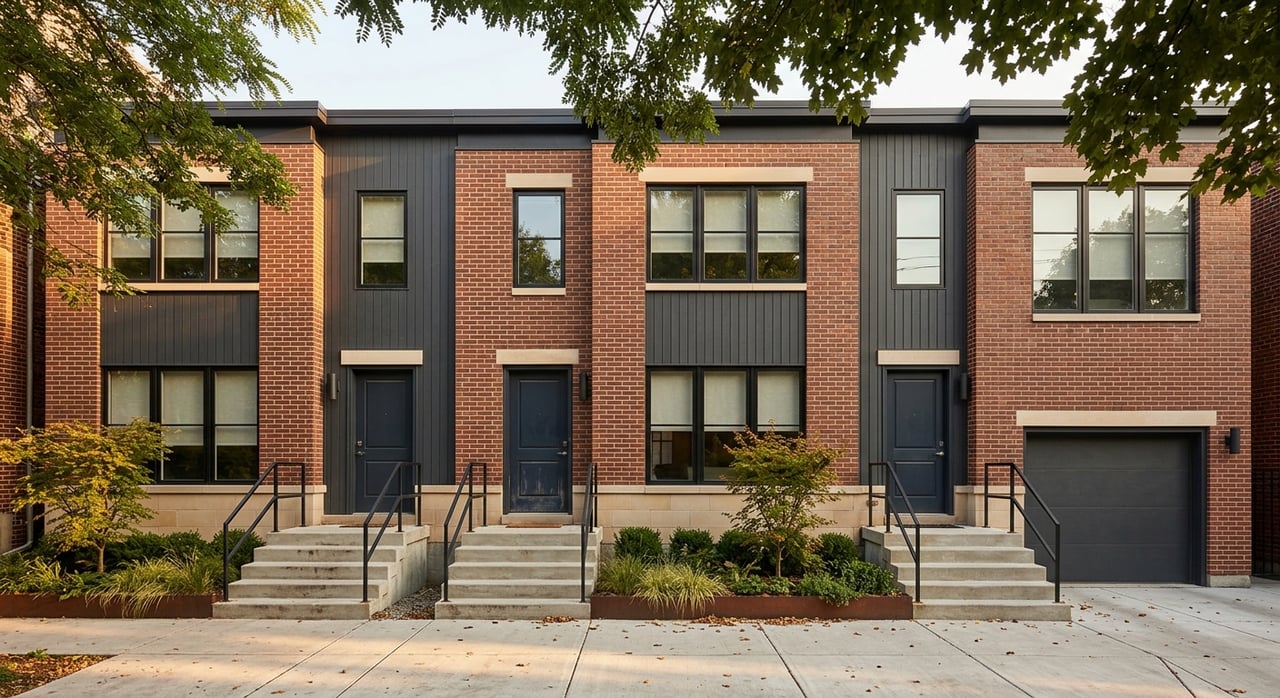
In practice, many of Denver’s townhome options are concentrated in central, walkable neighborhoods. Popular areas include Washington Park, Central Park, Platt Park, Cherry Creek, and Hilltop. For buyers who care about location and lower exterior maintenance, that can make townhomes especially appealing.
Where Denver townhomes stand on price
One of the biggest buyer questions is whether townhomes are actually affordable. In many cases, they are more affordable than detached homes, but they are usually not cheaper than condos. Current citywide listing data places Denver townhomes around $625,000, while condos are around $325,000.
That puts townhomes in a middle position on Denver’s price ladder. They often sit above condos and below many detached homes, but the gap is not always wide. Once you add HOA dues and insurance costs, the monthly savings compared with a detached home can shrink.
This is why it helps to think beyond sticker price. A townhome that looks like a budget-friendly step up from a condo may come with carrying costs that change the picture. Today’s market rewards buyers who compare the full monthly payment, not just the list price.
HOA fees and insurance matter more now
Buyer demand in Denver’s attached segment is being affected by ongoing cost concerns. DMAR’s April 2026 commentary noted that HOA fees and insurance costs continue to weigh on buyer interest. That is one reason attached homes are moving more slowly than single-family homes.
If you are shopping for a townhome, this is one of the most important parts of your review process. HOA dues can cover meaningful services and maintenance, but they also affect affordability. Insurance costs can also shape your monthly budget in ways that are easy to underestimate at first.
A smart search is not just about finding the right floor plan or block. It is about understanding what you are really committing to each month and whether the tradeoff fits your goals.
Neighborhood trends shape value
Denver townhome pricing is highly neighborhood-specific. A townhome in one part of the city may function as an entry point into homeownership, while a similar property type elsewhere may be positioned as premium housing. That is why neighborhood-by-neighborhood analysis matters.
West Highland townhomes
West Highland currently shows 13 townhouses at a median listing price of $759,000 and 7 condos at $432,000. The area is also considered fairly walkable, with a Walk Score of 78. If you want an urban lifestyle with a more central feel, West Highland is one place where townhomes may offer a balance between location and price.
For some buyers, this kind of market can feel like a practical compromise. You may pay more than you would for a condo, but you may still stay below pricing seen in Denver’s most expensive attached-home pockets.
Berkeley townhomes
Berkeley shows 16 townhouses at a median listing price of $1.17 million and 8 condos at $248,000. It also carries a Walk Score of 82. That spread is a strong reminder that townhomes are not always the affordable middle option.
In Berkeley, townhomes can occupy a premium tier of the market. If this neighborhood is on your list, it is important to shop with realistic expectations about pricing and competition within that specific segment.
Cherry Creek townhomes
Cherry Creek stands out as one of Denver’s strongest premium attached-home markets. Current data shows 45 townhouses at a median listing price of $1.72 million and 34 condos at $713,000. The neighborhood also has a Walk Score of 81, and its overall median sale price is $1.205 million.
That means a Cherry Creek townhome is not simply an alternative to a detached home. In many cases, it is a high-end property choice in its own right. If your goal is a central location with an urban feel and a polished housing stock, Cherry Creek townhomes may fit, but affordability may not be the main advantage.
Cherry Creek may also continue to evolve as an attached-home destination. The Cherry Creek West redevelopment is underway on a 13-acre mixed-use site on the west side of the district, reinforcing the area’s dense urban character and potentially adding more housing supply over time.
What today’s trends mean for buyers
For today’s buyers, Denver townhomes are most strategic when your priorities include walkability, a central address, and less exterior upkeep than a detached home. They can offer a lifestyle advantage that many buyers value. That is especially true in neighborhoods where land is limited and attached housing is part of the appeal.
They may be less strategic if your main goal is the lowest possible monthly cost. In Denver’s most desirable attached-home neighborhoods, higher list prices, HOA dues, and insurance costs can reduce the expected savings. In some cases, you may find that a detached home farther out offers a similar monthly payment.
The attached market’s slower pace may give you more breathing room. With attached homes spending longer on market than single-family homes in early 2026, you may have more time to compare options and negotiate carefully. That can be helpful if you are a first-time buyer or simply want to make a more measured decision.
How to shop Denver townhomes wisely
If you are actively looking, it helps to approach townhomes as their own category rather than assuming they behave like condos or detached homes. A focused strategy can help you avoid surprises.
Compare monthly cost, not just price
Look at the full payment picture, including principal, interest, taxes, insurance, and HOA dues. In Denver’s attached market, this is often the clearest way to judge whether a townhome is truly the right value for you.
Study each neighborhood separately
West Highland, Berkeley, and Cherry Creek are all attached-home markets, but they function very differently on price. Neighborhood context can tell you more than citywide averages ever will.
Expect townhomes to vary by lifestyle
Some townhomes are about convenience and location. Others are luxury properties with pricing that rivals detached homes. It helps to define your goal early so you can narrow the right options faster.
Use slower market pace to your advantage
Because attached homes have been taking longer to sell than single-family homes, you may have more room to ask questions, review HOA details, and compare alternatives. That extra time can lead to better decisions.
The bottom line on Denver townhomes
Denver townhomes are not a one-size-fits-all shortcut to affordability. In today’s market, they often sit between condos and detached homes on price, but neighborhood, HOA costs, and insurance can quickly change the value equation. In places like West Highland, they may offer a practical middle ground, while in Berkeley and Cherry Creek they can be a premium purchase.
If you want a central location, a more urban lifestyle, and less exterior maintenance, a townhome can still be a smart fit. The key is to evaluate each opportunity with clear eyes and local context. If you want help comparing Denver neighborhoods, monthly costs, and attached-home options that match your goals, Lauren Basford can help you make a confident move.
FAQs
Are Denver townhomes cheaper than Denver condos?
- Usually no. Current citywide listing data shows Denver townhomes around $625,000 compared with condos around $325,000.
Are Denver townhomes easier to buy than Denver detached homes?
- Sometimes, but it depends on the neighborhood and price range. Attached homes have been moving more slowly than single-family homes in 2026, which may give buyers more time, but premium townhome areas can still be expensive.
Do HOA fees matter when buying a Denver townhome?
- Yes. DMAR reported that HOA fees and insurance costs continue to weigh on buyer demand in the attached segment, so they are an important part of your budget review.
Which Denver neighborhoods have notable townhome inventory?
- Current listing data highlights neighborhoods such as Washington Park, Central Park, Platt Park, Cherry Creek, and Hilltop, with active attached-home inventory also noted in West Highland, Berkeley, and Cherry Creek.
Are all Denver townhomes a good value compared with detached homes?
- Not necessarily. In some neighborhoods, especially Berkeley and Cherry Creek, townhomes can be premium properties with pricing that narrows or even changes the affordability gap versus detached homes.